The Last Unalgorithmic Television: Watching the Council Meeting Is Weirdly Good for You
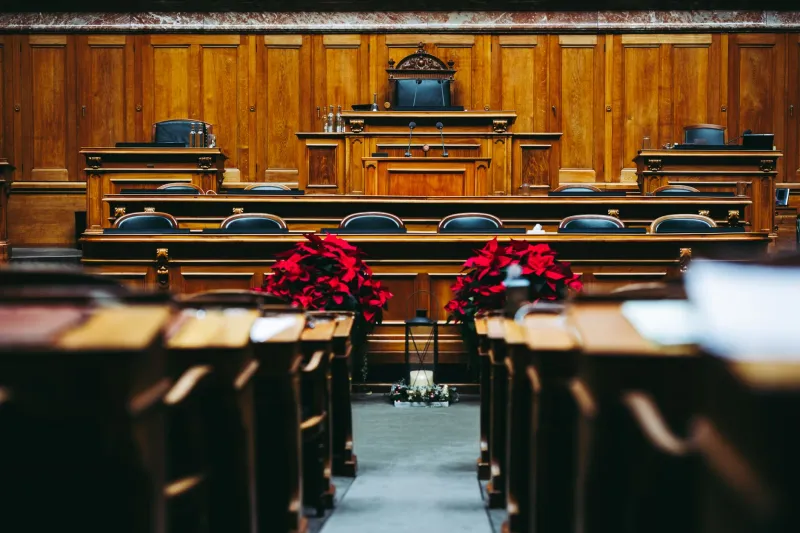
On a wet Tuesday night, when the algorithms have exhausted themselves and every streaming service is offering you a gritty detective with a troubled past, there is another option. It is not glossy. It is not scripted. It has a running time of three hours and 12 minutes, and somewhere in the middle a man in a fleece explains why the bin store should not be moved four feet to the left. Welcome to the council meeting livestream: Britain’s least hyped, most accidentally gripping form of local television.
You do not find it through a billboard. You find it because a neighbour posts a link in the village WhatsApp group, or because you are idly searching for information about a planning application and stumble into a YouTube channel with 412 subscribers and a webcam pointed at a semi-circle of chairs. And then, before you know it, you are 40 minutes deep and emotionally invested in whether Councillor Braithwaite will get a seconder for amendment 3b.
The accidental box set
What makes these streams so watchable is not the drama. It is the anti-drama. Nothing is edited for pace. Nobody has been cast for charisma. The sound cuts out at the exact moment someone says something vital. A screen share fails. The chair says “order, order” with the weary authority of a supply teacher who has already confiscated two phones and a laser pointer. It is real life, with all the dead air left in.
In an age of polished vertical videos and creators apologising for the lighting, there is something almost rebellious about a fixed camera, a fluorescent ceiling and a room full of people who have given up their evening to discuss a dropped kerb. The stakes are small, but they are not zero. That is the secret. A dropped kerb is not abstract. It is Mrs Patel’s mobility scooter, the pram outside the chemist, the reason the bin lorry keeps clipping the hedge. Local politics is where national policy goes to put its shoes on.
Civic theatre with an agenda
There is a temptation to watch these meetings as comedy. And yes, there are moments. The microphone that is clearly muted while its owner explains, at length, that they are not muted. The rogue cat that wanders into frame behind the clerk and sits down as if it has been invited. The 47-minute debate about a dropped kerb that somehow becomes a broader discussion about parking, verges, the state of the pavements, and whether the council has “lost its way since the old building”. It is funny because it is human.
But the better way to watch is as civic theatre. You learn things. You learn how a planning committee works, why a deferral is not a rejection, what a section 106 agreement is, and how much unpaid time goes into the ordinary running of a place. You learn that the person who shouts loudest on Facebook is often not the person who turns up on a wet Tuesday. You learn that democracy is mostly admin, and that admin is mostly people trying to be fair while secretly wanting to go home.
Why it scratches an itch
Streaming platforms are built on the promise of more. More choice, more prestige, more content. Council livestreams offer the opposite: fewer choices, lower stakes, and a strange sense of calm. You are not being sold anything. You are not being nudged towards a purchase. The algorithm has no idea what to do with you. You are simply watching a public body do public business, in public, for free.
That is oddly restful. It is also useful. If you have ever wondered why the local leisure centre is closing, or why the road outside your house is being resurfaced in stages with no apparent logic, the answer is probably in a meeting you did not watch. The archive is there. The agenda papers are there. The timestamps are there. It is local journalism without the journalist, and it is available to anyone with a browser and a tolerance for buffering.
How to watch without becoming a clerk
You do not need to start at the beginning. Most streams have chapters now, or at least a published agenda that lets you skip to the item you care about. Start with the planning committee. It is the most immediately tangible. Then try licensing. Then, if you are feeling brave, full council, where the set pieces happen and the chair has to use the phrase “through the chair” more than anyone should have to in a single evening.
Keep the volume low. Make a cup of tea. Do not expect resolution. The best council meetings are not the ones where everything is decided; they are the ones where you see the seams. Someone misreads a paragraph. Someone else asks a question that has no answer. A cat enters. The clock ticks past nine. The chair suggests moving to item seven. And you realise you have been watching local democracy in its natural habitat: unglamorous, slightly chaotic, and quietly essential.
In 2026, we are spoilt for things to watch. We are not spoilt for things that ask nothing of us but our attention. A council livestream asks for your attention and, in return, shows you how the place you live actually works. It is not prestige television. It is better than that. It is yours.