Bay Watch: The Hyperlocal Facebook Groups Where Parking Is a Full-Contact Sport
There is a particular kind of British drama that does not require a streaming subscription. It unfolds in a Facebook group called something like ‘Sprowston & District Neighbours — NO POLITICS PLEASE’, and it begins, as so many things do, with a photograph of a silver hatchback straddling two parking bays.
The caption is rarely neutral. ‘Anyone know whose car this is?’ it might read. ‘Been like this since Tuesday.’ Within minutes, the replies arrive: a sympathetic emoji, a forensic analysis of the Highway Code, a tangential complaint about wheelie bins, and at least one person suggesting the driver should be ‘named and shamed’. By teatime, the post has 83 comments and someone has mentioned the war.
Welcome to the hyperlocal Facebook group, Britain’s most underrated form of reality television. It is part noticeboard, part neighbourhood watch, part amateur soap opera, and it is utterly compulsive.
The new parish pump
We have always had local forums. In the 1990s it was the newsagent’s window; in the 2000s it was Freecycle; now it is a Facebook group with a cover photo of a duck pond and an admin team who take their responsibilities very seriously. These groups exist in every corner of the UK, from suburban cul-de-sacs to rural villages where the broadband is patchy but the gossip is fibre-optic.
The content is gloriously mundane. Someone has lost a cat. Someone has found a cat. Someone is giving away a sofa with ‘a few marks, nothing major’. Someone is asking whether the recycling lorry has been yet, despite the fact that the council website exists and the answer is always ‘check the calendar’.
But scratch beneath the surface and you find something more interesting. These groups are where the polite fiction of British neighbourliness meets the messy reality of shared space. Parking is the flashpoint because parking is territory. It is the one bit of public realm we treat as private property, and when someone parks in ‘our’ spot, it feels less like a minor inconvenience and more like a diplomatic incident.
Why we cannot look away
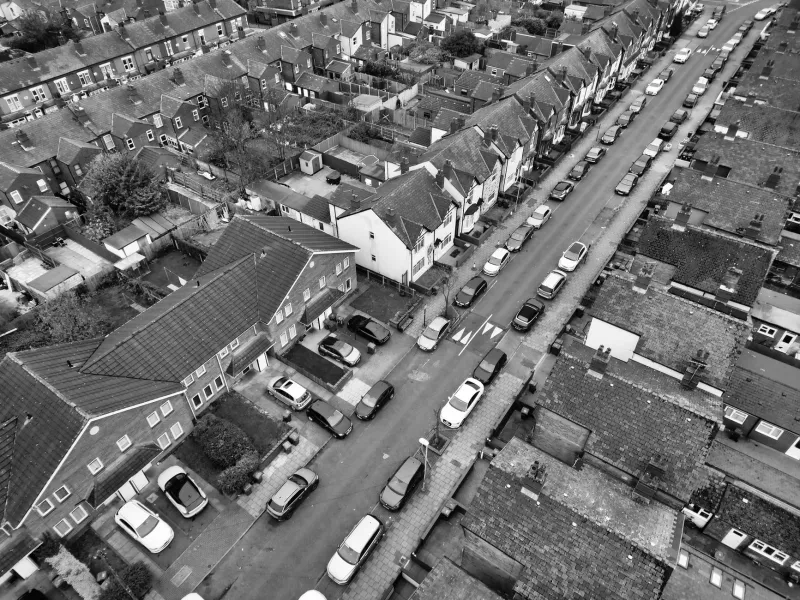
The appeal is not schadenfreude, exactly. It is closer to recognition. Anyone who has ever lived on a terraced street knows the quiet fury of returning home to find a stranger’s van outside your house. Anyone who has ever had a neighbour’s builder block the pavement knows the specific joy of composing a firm but fair Facebook post at 7.42am.
These groups are also a useful reminder that community still exists, even if it looks different from the one we imagine. We may not know our neighbours’ names, but we know their number plates. We may not borrow cups of sugar, but we will absolutely lend a hand with a push-start if the battery is flat and the school run is in ten minutes.
There is something oddly comforting about the daily rhythm of it. The bin day reminder. The lost cat alert. The warning about a suspicious white van that turns out to be a delivery driver called Dave who has lived locally for 14 years. The group is a low-stakes news ticker for the street, and checking it has become as automatic as looking out of the window.
The rules of engagement
Every group has its own ecosystem. There are the self-appointed moderators, who keep order with a mix of passive-aggressive emojis and bold text. There are the lurkers, who never post but somehow know everything. There are the serial complainers, the helpful retirees, the people who reply ‘PM’d you’ and the people who reply to a question about parking with a detailed history of the council’s 2019 consultation on residents’ permits.
And then there is the parking post itself, which follows a well-worn narrative arc. Act one: the photo. Act two: the outrage. Act three: the defence (‘I was only there five minutes’). Act four: the escalation, usually involving a claim about emergency access. Act five: the admin steps in and turns off comments. It is a three-act play performed in real time, with typos.
What makes it addictive is the stakes. This is not abstract national politics or celebrity gossip. It is immediate, local and solvable, in theory. The car might move. The bin might be collected. The cat might come home. There is a satisfying smallness to it that feels like a relief from the endless churn of bad news.
A kinder reading
It would be easy to mock these groups as petty. And yes, some of them are. But most are also genuinely useful. They are where people ask for recommendations for a reliable plumber, where they offer spare tomatoes from the allotment, where they organise a whip-round for a neighbour who has had a rough year. They are a digital version of the village hall noticeboard, with a slightly higher chance of a row about wheelie bins.
In 2026, when so much of online life is designed to be frictionless and global, the hyperlocal group is stubbornly specific. It is about one street, one postcode, one set of bins. It is messy and repetitive and occasionally maddening. It is also proof that we still care about the people who live next door — even if we only show it by telling them, very politely, that their car is blocking the pavement.
So the next time you see a post that begins ‘Sorry to bother you all…’, read on. It is not just a parking dispute. It is a small act of community, performed in public, with all the awkwardness and humour that entails. And somewhere in the replies, someone is already typing: ‘Can you move your car?’
We would not have it any other way.