The Generator Has Other Ideas: A Field Guide to the Great British Christmas Lights Switch-On
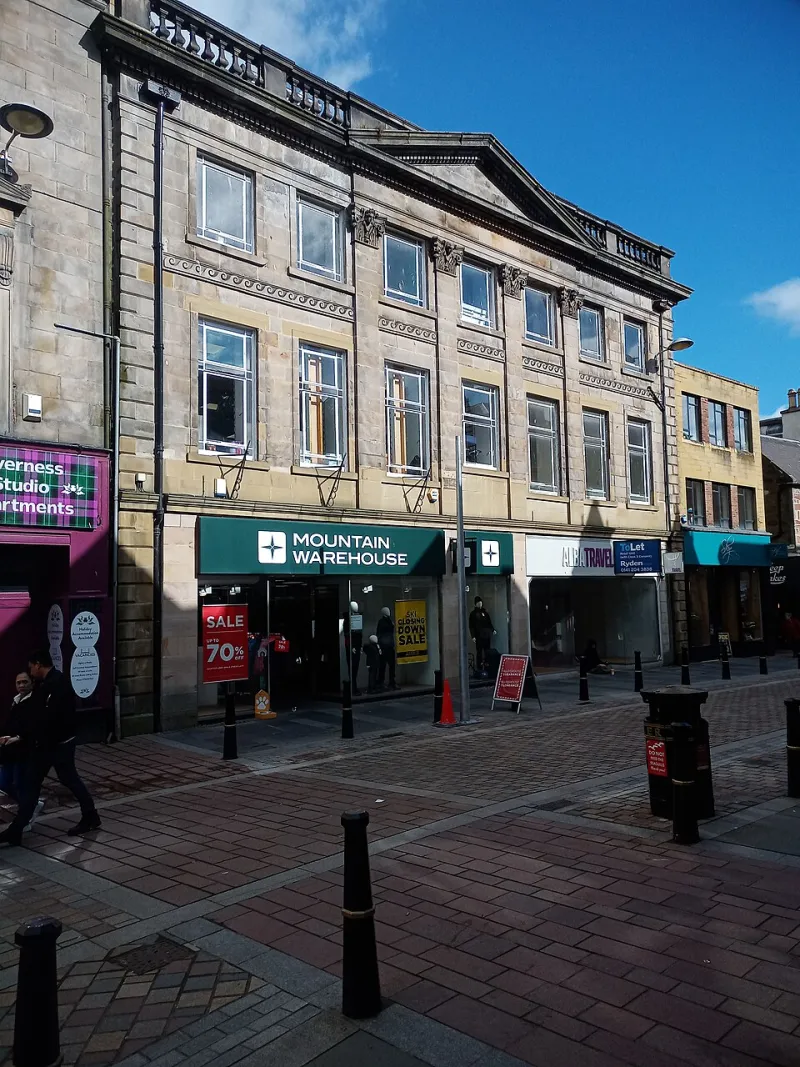
Photo: Victuallers, CC BY-SA 4.0, via Wikimedia Commons
Every November, somewhere between the late-night shopping adverts and the first proper frost, a British high street attempts to become a winter wonderland using a borrowed generator, three extension leads and the collective willpower of a rotary club. In 2026 the ritual remains gloriously unchanged: a stage made of scaffolding, a compere in a waterproof coat, and a crowd of people who have come out for one reason — to see something go from off to on.
The bit before the countdown
The Christmas lights switch-on is not really an event. It is a negotiation. On one side you have the council, the chamber of commerce, the local radio station and a man called Keith who has the keys to the generator. On the other you have the weather, the electricity supply, a child who has been promised a glimpse of a reindeer, and the Facebook group already asking why the money wasn’t spent on potholes.
What makes it so watchable is that everyone involved knows the stakes are tiny and behaves as though they are enormous. This is local democracy in its purest form: three councillors standing near a fir tree in a loose triangle, each quietly convinced they should be the one holding the switch. There are speeches. There are thank-yous. There is a pause while someone finds the right adapter. It is the closest modern Britain gets to a village pantomime without a script.
A masterclass in low-stakes chaos
The headline booking is always a minor celebrity who has been secured off the back of a soap exit. They left a fictional village in dramatic circumstances — a fire, a affair, a long-lost son — and now they are on a cold stage in a market square, holding a countdown clicker and saying “I love it here” with the fixed cheer of someone who has been briefed by a local PR. They will mention the town by name. They will get the name slightly wrong. Nobody minds, because the point is not the celebrity. The point is that there is a celebrity at all.
Then comes the sound system. It is always the sound system. The playlist has been the same since roughly the invention of the CD: a bit of Slade, a Michael Bublé song nobody can place, and Wham!’s ‘Last Christmas’. The moment the opening bars start, something in the generator decides it has had enough. The music drops. The microphone squeals. The crowd, who have been waiting patiently in hats, gives a low collective groan that is somehow warmer than applause. The compere taps the mic and says, “We’ll get that sorted,” and we all know they will not get that sorted.
Spotting the committee members
If you want to understand the social hierarchy of a switch-on, ignore the stage. Watch the edges. The people who organised this are easy to identify once you know the signs.
First, the hi-vis lanyard. Not a plain lanyard — a hi-vis one, preferably with a laminated badge that says something like “Event Steward” and a clip that has been reused since a summer fete. They are the ones walking with purpose in a small circle, radio in hand, saying “we’re on in five” to people who are not on in five.
Second, the flask. A proper flask, not a paper cup. The flask owner is the true power behind the switch. They have been here since 3pm. They have a spare pair of gloves in the car. They know which councillor is about to say something too long and which one has already nipped off for a mince pie. If you see someone with a flask and a clipboard, you are looking at the chair of the organising committee. Address them with respect.
Third, the person holding the actual switch. This is usually a child chosen by competition, a mayor in ceremonial chains, or a local business owner who donated the lights and has been promised “a quick mention”. The switch itself is often a prop — a large plastic lever that does nothing — while the real power is a man called Keith, crouched behind the generator, waiting for a nod. This is the British way: elaborate ceremony on top, practical improvisation underneath.
The Facebook aftermath
Within minutes of the lights coming on, the local Facebook group will have a thread. It will begin with a photo of the tree, slightly blurred, captioned “Well done to everyone involved.” Within four comments, someone will ask how much it cost. Within six, someone will say the lights are “not as good as previous winters”. Within ten, a councillor will reply in a personal capacity, and someone will accuse them of “getting defensive”. By midnight, the thread will have split into two separate debates: one about parking, one about whether the reindeer was a real reindeer or a man in a suit.
This is not a flaw in the event. It is the event’s second act. The switch-on gives a town something to look at together; the Facebook group gives it something to argue about afterwards. Both are forms of community, just with different lighting.
Why we keep doing it
It would be easy to be cynical about the whole thing — the wobbly stage, the celebrity who needed directions, the generator that gave up during the chorus. But the switch-on persists because it is one of the few remaining civic events that asks nothing of you except that you turn up. You do not need a ticket. You do not need to believe in anything. You just stand in the cold with your neighbours and watch a high street try its best.
In 2026, with everything else going on, that feels oddly valuable. The lights may be LED, the generator may be faulty, and the celebrity may be best known for a storyline involving a stolen tractor. But for one evening, the town is the centre of its own universe. The switch goes on. The crowd cheers. And somewhere behind the tree, a man called Keith quietly unplugs something and hopes nobody notices.