The Patterned Floor Beneath Us: How Wetherspoon Carpets Became Britain's Unlikeliest Art Form
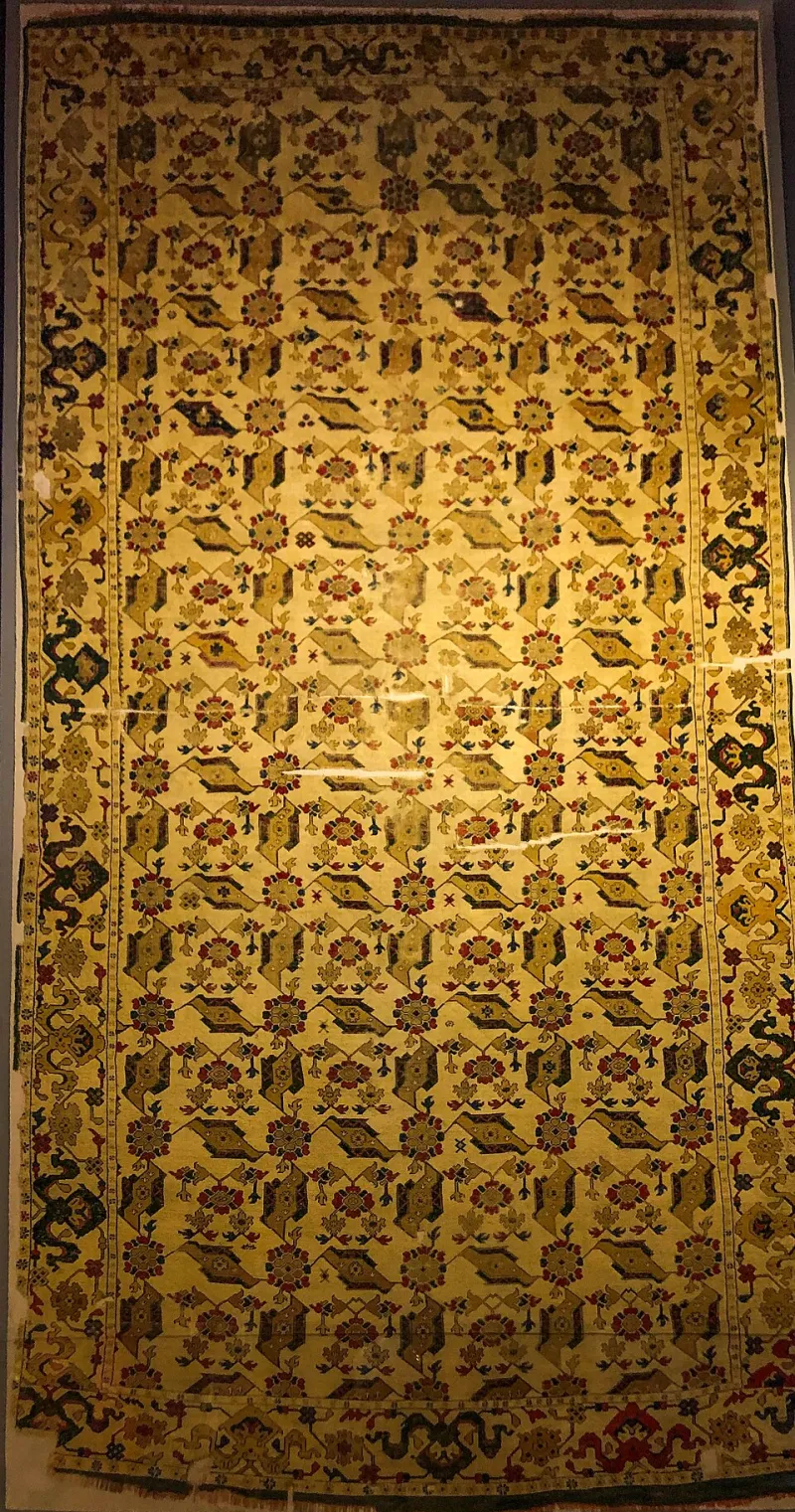
Photo: Sefer azeri , CC BY-SA 4.0, via Wikimedia Commons
I once spent a good ten minutes staring at the floor of a Wetherspoon in a town I can no longer name. Not because I had dropped anything. Because the carpet was extraordinary: a swirling, slightly psychedelic mess of reds and golds, the kind of pattern that seems designed to hide a thousand spilled pints and, in doing so, achieves a kind of accidental beauty.
It turns out I am not alone. There are thousands of people who do this. They photograph the carpets, catalogue them, compare them. There is a book about it — Wetherspoon's Carpets: An Appreciation, published in 2019 — and there are online groups where a blurry photo of a pub floor will attract dozens of comments, most of them variations on 'that's a classic' or 'I know that one, it's the one near the station'.
The Accidental Gallery
What is it about these carpets? On the face of it, nothing. They are practical, hard-wearing, easy to clean. They are chosen, presumably, by people who care about durability and budget, not aesthetics. And yet, in the aggregate, they have become something else: a kind of accidental museum of British design, spread across the country in hundreds of branches, free to enter, open from breakfast.
The patterns are lurid, busy, occasionally baffling. Some look like the wallpaper in a haunted hotel. Some look like a kaleidoscope that has been through a rough divorce. But look at enough of them and you start to notice the logic: the way the pattern frames a table, the way the colours shift depending on the light, the way a cheap carpet can make a room feel warmer, fuller, more like somewhere you might stay for another half.
Why Carpets, Why Now
There is something very 2026 about this obsession. We have spent the past few years rediscovering the pleasures of ordinary British things: the charity shop, the car boot, the library café. The Wetherspoon carpet fits neatly into that list. It is unpretentious, ubiquitous and slightly ridiculous, which makes it perfect material for the internet.
It is also, quietly, about change. Wetherspoon pubs have been closing branches, selling others, reshaping the high street in the process. Some of the carpets photographed in these groups now belong to buildings that are no longer pubs. The photos have become a record, however unintentional, of places that were there and then weren't. That is the sort of thing that makes people look twice at a floor.
A Floor That Tells You Where You Are
There is a practical pleasure to it as well. A Wetherspoon carpet is a landmark. It tells you that you are in a certain kind of place: cheap pints, no music, a menu that runs from breakfast to closing, a clientele that is genuinely mixed. You can be in a strange town, walk into a branch, and recognise the flooring before you recognise anything else. It is a small, odd form of belonging.
And there is comfort in that. The carpet is not trying to be anything other than what it is. It is a floor. It is there to be walked on. But somebody designed it, somebody chose it, and somebody, somewhere, is now photographing it for a group of strangers who will appreciate it. That is a very British kind of attention: affectionate, slightly ironic, and entirely sincere underneath.
The Romance of the Reasonable
I do not think the Wetherspoon carpet is high art. I do not think it needs to be. What it is, is a reminder that beauty — or at least interest — can turn up in the most ordinary places, at the most reasonable prices. You do not need a gallery ticket to look at a floor. You just need to look down.
Next time you are in a Spoons, waiting for a pint to settle, have a glance at the carpet. You might find yourself taking a photo. You might find yourself, God help you, developing a favourite.