The Bread Maker on the Metal Heap: A Saturday Morning at the Tip
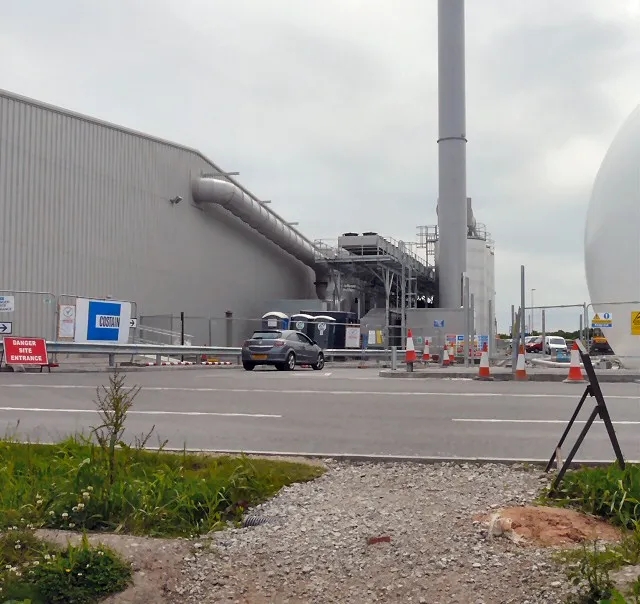
Photo: Gerald England , CC BY-SA 2.0, via Wikimedia Commons
Saturday, 8.40am. I am fourth in a queue of estates, hatchbacks and one Transit van with a mattress strapped to its roof like a very tired kite. Ahead of me, a man in a fleece is eating a bacon roll with the calm focus of someone who has already achieved something. Behind me, a woman is explaining to nobody in particular that she has a booking slot and she is not going to miss it. This is the tip. And it is, I have come to believe, Britain's most honest social club.
Not a members' club, obviously. There is no joining fee, no dress code and no one checking your credentials beyond a number plate and a vague sense that you have brought the right sort of rubbish. But there is a shared purpose, an unspoken rulebook and a cast of regulars. You arrive with a broken lawnmower and a sense of mild guilt. You leave with a lighter car, a lighter conscience and, if you are lucky, a story about the bread maker.
The Queue Is the Warm-Up
The queue at a household waste recycling centre is a peculiar thing. It is not quite a queue and not quite a car park. It has the stop-start rhythm of a supermarket car wash and the social atmosphere of a village hall jumble sale. People get out. People stretch. People eye each other's loads with the polite, sideways curiosity of birdwatchers.
There are rules, of course. There are always rules. Don't block the entrance. Have your booking ready. Reverse into the bay if you can, because someone will be waiting behind you. And do not, under any circumstances, treat the whole thing like a drive-through. The tip is a place where patience is currency. A man with a trailer full of hedge cuttings is no more important than a woman with three bin bags and a broken kettle. In fact, he might be less important, because he has clearly been putting off the hedge.
What I love about the queue is the lack of pretence. Nobody is dressed for it. Nobody is pretending to be anywhere else. It is one of the few places in Britain where a Range Rover and a Corsa are briefly united by the same problem: what on earth do you do with a trampoline frame?
Skip Diplomacy
Then there is the skip itself. Or rather, the skips: metal, wood, garden waste, electricals, hardcore, the mysterious corner for things that do not fit anywhere else. Each one has its own personality. The metal skip is the most romantic, because metal is where hope goes to die and occasionally get rescued. The wood skip is the most satisfying, because wood makes a noise when it lands. The electricals skip is the most tragic, a graveyard of kettles, monitors and exercise bikes that were definitely going to be used this year.
There is an etiquette to it. You do not rummage where you are not supposed to. You do not make a scene. But you do look. A quick glance, a raised eyebrow, a fractional nod towards a neighbouring load. Is that a decent strimmer? Is that a cafetière? The best finds are never announced loudly. They are negotiated with the eyes, like a dog owner acknowledging another dog owner across a park.
On my last visit, I watched a man carry a bread maker to the metal heap with the solemnity of someone laying a wreath. It was clean. It had its paddle. It had the little measuring cup. It was, by any reasonable standard, a perfectly good bread maker. He set it down, stepped back and looked at it for a second too long. Then he walked away. Ten minutes later, another man picked it up, turned it over, nodded once and put it in his boot. No words were exchanged. It was the most efficient transaction I have seen all year.
A Museum of Domestic Life
The tip is also a museum. Not a curated one, obviously. There are no labels. But everything there tells you something about how we live. The bread maker says: we had good intentions. The exercise bike says: we had good intentions in January. The framed jigsaw of a Highland landscape says: we finished it, we were proud of it, and then we realised we had nowhere to put it. The boxed DVD set says: we are not quite ready to admit that streaming won.
You see the whole arc of a household in a single morning. The first flat, the family home, the downsizing, the clear-out after a parent dies. There is something oddly moving about it. The tip does not judge. It just receives. It is the opposite of Instagram. Nothing is styled. Nothing is filtered. A cracked paddling pool is just a cracked paddling pool.
And yet there is beauty in the honesty. The tip is a place where things end. That sounds bleak, but it is not. There is a strange comfort in seeing the end of the line, in knowing that the plastic slide has had its day, that the lawnmower has finally given up, that the bread maker will rise again in someone else's kitchen. It is recycling as reincarnation, with a hi-vis vest.
Everyone Is Briefly Equal
What strikes me most, though, is the equality of the place. You can be a lawyer, a plumber, a student, a retiree. You can arrive in a leased Audi or a car that is held together by hope and gaffer tape. For twenty minutes, none of it matters. You are all just people with stuff. You are all wearing old clothes. You are all slightly cold. You are all trying to work out which skip the paint tins go in.
The staff, meanwhile, are the closest thing Britain has to secular saints. They direct traffic. They answer the same questions forty times a day. They tell you, with enormous patience, that no, the old freezer cannot go in the general waste, and yes, you do need to take it to the big metal container at the back. They have seen everything. They are unshockable. They are also, in my experience, quite funny, in the way that people are funny when they have nothing left to prove.
The Weird Comfort of It
I did not expect to find comfort at the tip. It is not a cosy place. It smells of diesel and damp cardboard. The seagulls are enormous. The floor is always slightly wet. But there is something about it that feels more real than most of the internet. It is a place of physical things and physical effort. You lift, you sort, you carry, you leave. There is a beginning, a middle and an end. Nobody is trying to sell you anything. Nobody is performing.
And then you drive home. The car is lighter. The boot is empty. You have done a small, useful thing. You have also, if you are lucky, seen a bread maker find a new life. The tip does not pretend to be a social club. But it is one, all the same. It is the most honest one we have.