The Exact-Change Test: Inside the Roadside Honesty Box Where Trust Has a Price and It’s Usually £2.50
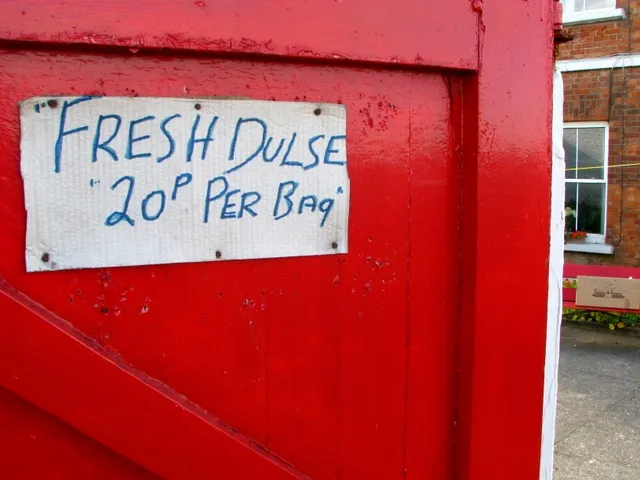
Photo: Ross, CC BY-SA 2.0, via Wikimedia Commons
The fridge sits at the end of a farm track, humming politely beside a hedge. It is white, slightly scratched, and held shut by a strap that has seen better decades. Inside: eggs, some jam, a few bags of potatoes, and a single courgette that appears to have been left there as a dare. Beside it, a plastic tub with a slit cut into the lid. Above it, a laminated sign: Eggs £2.50. Please pay. Thank you.
This is one of Britain’s smallest and most peculiar retail experiences. No till, no receipt, no staff, no CCTV. Just produce, a price, and a cash box that relies on the better nature of anyone who happens to pull over. In 2026, when so much of life has been streamlined into apps and accounts, the roadside honesty box remains gloriously analogue. It is also changing, slowly, as QR codes start to appear beside the Tupperware.
The Tupperware till and the social contract
Honesty boxes are not really shops. They are small acts of optimism dressed up as commerce. The eggs are real, the jam is real, the price is real. But the transaction is held together by something less tangible: the assumption that most people, most of the time, will do the decent thing.
That assumption is doing a lot of work. A honesty box is a shop with the security removed and the social contract left exposed. You can see it in the signs. Some are typed and laminated; others are biro on the back of a feed sack. Some list prices. Some simply say honesty box and trust you to work it out. One near me has a handwritten note that reads: Correct change appreciated. Not essential. But appreciated. That sentence should be in the British Museum.
There is a particular guilt that comes with not having exact change. You open the tub, see a fiver and a handful of coppers, and realise you are about to become the person who leaves a £5 coin for a £2.50 bag of eggs. Or worse, the person who leaves £2 and drives off owing 50p to a fridge. The fridge does not chase you. The fridge does not send a reminder. That is the point. The absence of enforcement is what makes the small shortfall feel enormous.
A very British kind of micro-commerce
The honesty box is a cousin of the charity-shop book shelf and the village noticeboard: a tiny, local system that works because most people would rather not be the one who breaks it. It is not naive. Farmers and growers know the risks. They have always known. But the box keeps going because the alternative — packaging up eggs, driving to a market, paying for a pitch — is often more trouble than the margin justifies.
What you get instead is a form of micro-commerce that feels almost quaintly direct. Someone has too many eggs. Someone else wants eggs. The gap between them is bridged by a fridge and a tub. There is no brand story, no loyalty scheme, no upsell. The courgette is not a loss leader. It is just a courgette that needed a home.
And yet the honesty box is not entirely frictionless. It has its own etiquette. You do not take the last bag of potatoes without checking whether the sign says please leave some for others. You do not rummage through the cash box looking for change like it is a self-checkout. You do not photograph the sign for social media while the farmer is watching from a window, although people do. The rules are unwritten, which is another way of saying they are everywhere.
The QR code arrives at the gate
Recently, something new has started appearing beside the tub: a QR code. Sometimes it is printed on a little card, sometimes it is stuck to the fridge door, sometimes it is on a sign that still says cash preferred. The code leads to a payment page, a bank transfer, or a mobile number. The honesty box has discovered fintech.
This is not a betrayal of the form. It is an adaptation. Cash is becoming awkward for many people, and a farmer who sells a dozen eggs a day cannot afford to lose sales because nobody carries coins anymore. The QR code solves a practical problem. But it also changes the feel of the thing. Paying by card is frictionless, which means the little moment of moral arithmetic — the counting of coins, the decision about whether to overpay or underpay — is quietly removed.
I am not nostalgic for the days of scrabbling for 50ps. But there is something valuable in a transaction that asks you to pause. The honesty box is not just selling eggs. It is testing whether the small, unglamorous infrastructure of trust still works. The QR code does not necessarily fail that test. It just moves the test somewhere less visible.
What the courgette knows
The free courgette is the detail I keep coming back to. It sits there, oversized and slightly absurd, as if the box is saying: this is not a supermarket. We are not here to optimise. We are here because someone grew too much and someone else might want it.
That is the honesty-box economy in miniature. It is not a solution to anything. It is not scalable. It will not disrupt the grocery sector. But it is a reminder that trust is not only a grand, abstract thing. Sometimes it is a Tubberware tub with a slit in the lid and a sign that says thank you. Sometimes it is a £2.50 bag of eggs and the decision to pay for them when nobody is watching.
And sometimes it is a courgette, left by the side of the road, waiting to see who will take it home.